The problem
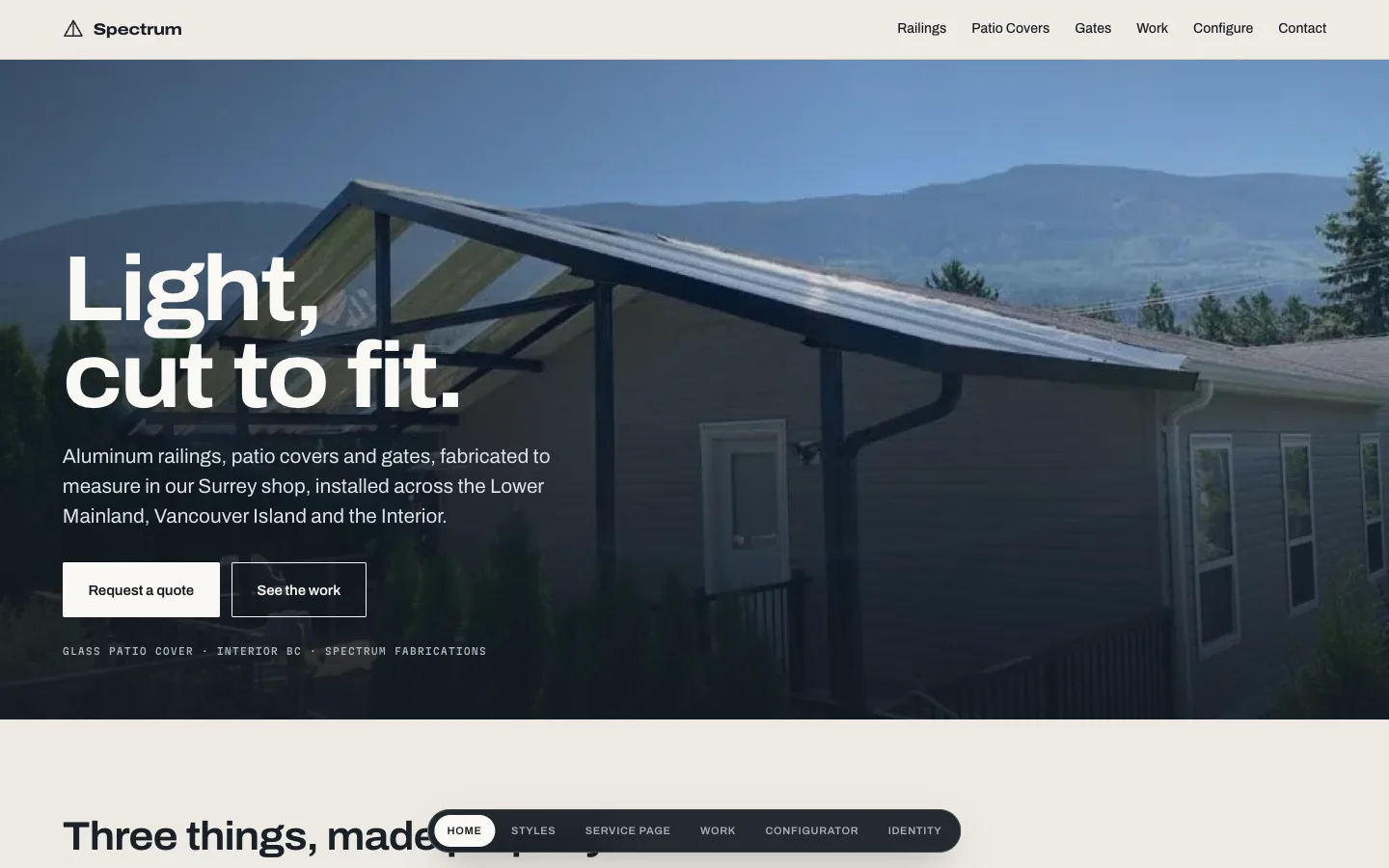
Spectrum Fabrications in Surrey, BC makes aluminum patio covers, railings and gates in its own shop. Its legacy site had stock photography, a golden-hour hero and a leaked email token in public JavaScript. The buyer is a homeowner on a phone collecting three quotes.
What was built
- A homepage whose hero renders a real aluminum railing in Three.js, assembling from base plates to top rail under a directional light that casts a real shadow. Drag the sun or scroll and the light moves.
- A railing configurator driven by the same model: rotate it, switch picket or glass infill, change the finish. WebGL falls back to a photograph on the hero and an SVG elevation in the configurator.
- A filterable projects page built from the client's own 41 job photos, a service page template that doubles as the local SEO surface, and an identity page that resolves the company's three conflicting names.
Decisions worth explaining
- Every fact the client had not yet supplied, from years in business to warranty terms, ships visibly hatched in amber rather than invented.
- A CSS-faked shadow was rejected in review because a shadow with nothing casting it is just stripes. It was replaced with real geometry under a real HDRI sun.
- No build step and no CDN: Three.js is vendored and loaded as an ES module so GitHub Pages serves it as-is.
- The leaked SMTP credential on the legacy site was reported to the client for rotation before anything else.
Outcome
A live concept the client can click through on a phone, with the configurator as the differentiator. Built end to end with Claude Code using the workflow in claude-setup.